


Your Professional CWF-Refrigerator Supplier!
Pro-APEX Electronics Co. . Ltd. has been deeply involved in the field of electronic components for 17 years since 2006. We are committed to the independent research and development and production of circuit protection technologies, products and related testing equipment.


Why Choose Us
Our Team
Our R & D team has been engaged in this industry for 30 years, developed numerous product formulations, is China's first batch of electronic components engineers, electronic components for China has made outstanding contributions to the cause.
One-Stop Service
In the fields of motor drive and control, power electronics reliability and power supply design, hardware development technology and components application, electromagnetic compatibility technology application, new energy low-voltage electrical apparatus, etc. , all of them have reasonable supporting schemes and technical support for electronic components.
Our Certifications
We are the first in the world to obtain 130℃certification. In our UL1449 certification, the standard requires that the number of lightning surge 15 times to determine the qualified, and our products after 20 lightning surge impact.
Wide Range Of Product Applications
Pro-APEX's main products include: capacitors, temperature sensors, NTC thermistors, varistors, fuses, Inrush Current PTC. Products are widely used in consumer electronics, power transmission and distribution systems, IT-AV, communications, white goods, new energy and other industries and fields.
Product Specifications
|
Product Name |
Refrigerator Temperature Sensor |
|
Dimension |
Customized(≥50mm) |
|
Product performance |
1.Wire specification:By Customer's Requirements |
|
2.Withstand voltage :AC1000V~AC2000V,3Sec |
|
|
3.Insulation:DC500V Min 100MΩ,3Sec |
|
|
4.Operating temperature range:-30℃~105℃ -30℃~125℃ |
pAdvantages of Refrigerator Temperature Sensor
Ensuring Food Safety
Maintaining a consistent temperature is crucial for food safety. The temperature sensor helps prevent the growth of harmful bacteria by keeping the internal temperature within safe limits. This is especially important for storing dairy, meat, and other perishable items that require specific temperature ranges to stay fresh.
Energy Efficiency
An efficient temperature sensor helps optimize the refrigerator's energy usage. By accurately detecting temperature changes, the temperature sensor ensures that the cooling system only operates when necessary. This reduces energy consumption, leading to lower electricity bills and a reduced carbon footprint.
Prolonging Appliance Lifespan
By preventing the refrigerator from overworking, the temperature sensor contributes to the longevity of the appliance. Consistent and accurate temperature control reduces the wear and tear on the compressor and other components, minimizing the risk of breakdowns and costly repairs.
High Accuracy
One of the standout features is its high accuracy. It provides precise temperature readings, ensuring that the refrigerator operates within the optimal range. This accuracy is essential for both food safety and energy efficiency.
Durability
The temperature sensor is designed to be durable and long-lasting. It can withstand the rigors of daily use and fluctuating temperatures, providing reliable performance over time. This durability ensures that your refrigerator remains in top working condition for years to come.
Easy Integration
The temperature sensors are designed for easy integration with the refrigerator's control system. They are compatible with a wide range of models, making them a versatile choice for many users. This ease of integration simplifies maintenance and repairs, ensuring that your refrigerator remains functional with minimal effort.
Resistance Temperature Detectors (RTDs): When the temperature fluctuates, RTDs directly change the resistance of the RTD element, which is typically made of platinum (Pt), nickel (Ni), or copper (Cu). RTDs are constructed with a film covering a glass, or ceramic core with a wire around it for increased accuracy.
Thermistors: A thermally sensitive resistor continuously changes resistance in increments in response to temperature changes. At low temperatures, a negative temperature coefficient (NTC) thermistor has increased resistance. This resistance decreases gradually as the temperature rises.
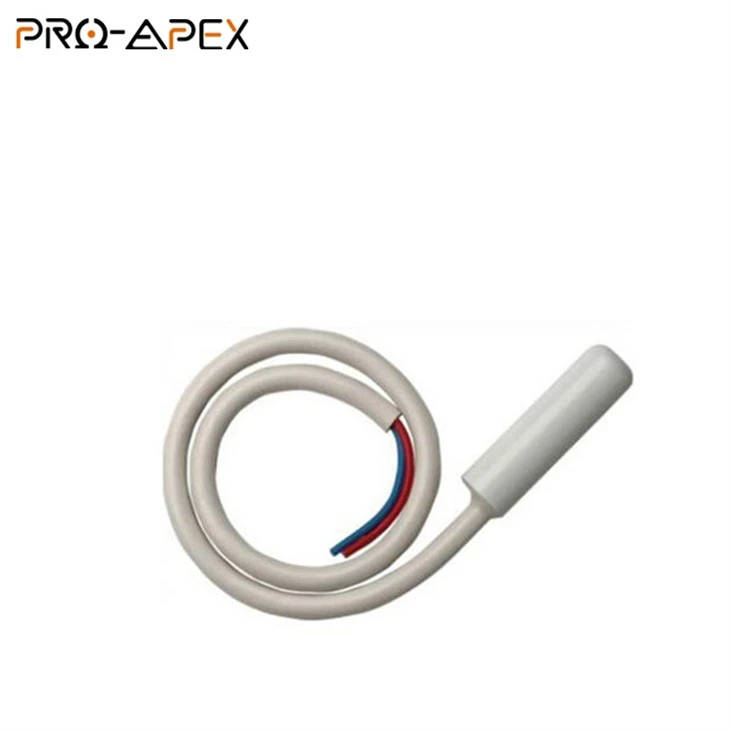
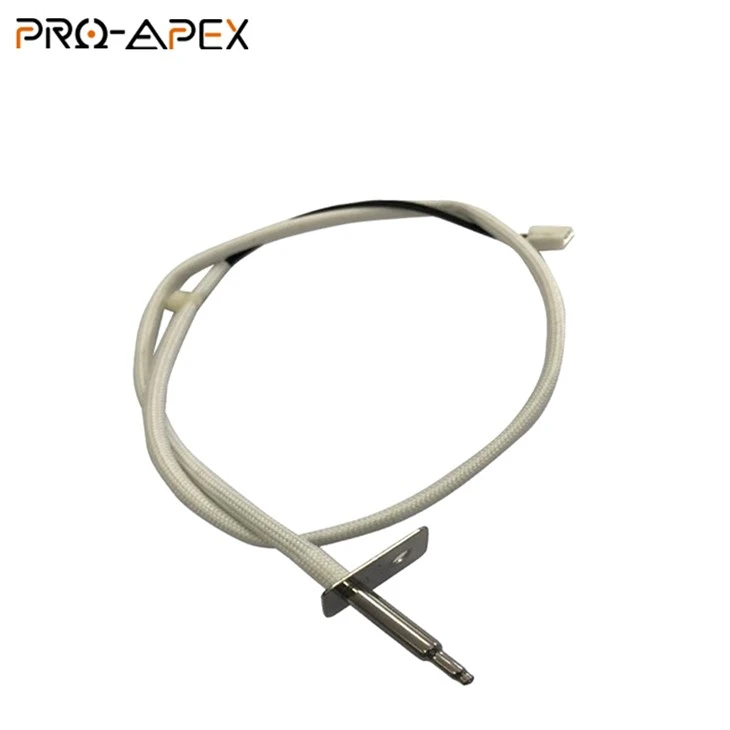
Thermocouples: A thermocouple is composed of two wires made of different metals that are electrically connected at two separate points. These two distinct metals create a changing voltage, which reflects proportional temperature changes.
Semiconductor-Based Sensors: Integrated circuits (ICs) often incorporate a semiconductor-based temperature sensor. Temperature fluctuations are tracked by two identical diodes with temperature-sensitive voltages. They provide a linear response with the least accuracy of the basic sensor types.
Applications of Refrigerator Temperature Sensor
Domestic Refrigerators and Freezers
Temperature sensors monitor and regulate the internal temperature of refrigerators and freezers, preventing food spoilage and foodborne illnesses.They ensure that both the refrigerator and freezer sections maintain the correct temperatures, crucial for preserving the freshness of various food items.
Industrial Refrigeration
In industrial settings, temperature sensors are used to maintain precise temperature control in large-scale refrigeration systems, vital for storing temperature-sensitive products like pharmaceuticals and food.
Refrigerated Transportation
Temperature sensors are used to monitor and maintain the temperature of perishable goods during transportation.
Display Refrigerators/Freezers
In retail settings, temperature sensors ensure that products like ice cream, beverages, and food are stored at the correct temperatures for optimal quality and freshness.
Pharmaceutical and Laboratory Refrigeration
Temperature sensors are essential for maintaining the integrity of temperature-sensitive medications and samples.
Installation and Maintenance of the Temperature Sensor
Installation Process
- Power Off the Refrigerator: Before starting, ensure that the refrigerator is unplugged to avoid any electrical hazards.
- Locate the Sensor Slot: Find the designated slot for the temperature sensor inside the refrigerator. This is usually near the back wall.
- Insert the Sensor: Carefully insert the sensor into the slot, ensuring that it is securely in place.
- Connect the Wiring: Attach the sensor’s wiring to the refrigerator’s control unit according to the instructions.
- Test the Sensor: After installation, plug in the refrigerator and test the sensor to ensure it is working correctly.
Maintenance Tips
Maintaining your temperature sensor is crucial for long-term performance. Here are some maintenance tips:
- Regular Cleaning: Keep the sensor clean and free of dust and debris. Wipe it gently with a soft cloth periodically.
- Check Connections: Ensure that the sensor's wiring connections are secure and free of corrosion.
- Monitor Performance: Regularly check the temperature readings to ensure the sensor is functioning correctly. Any significant deviations may indicate a need for calibration or replacement.
Packaging and Shipping

Company Certificate

We're well-known as one of the leading cwf-refrigerator manufacturers in China. If you're going to buy bulk high quality cwf-refrigerator at low price, welcome to get free sample from our factory. Also, customized service is available.
ntc thermistor for dishwasher, thermistor a type of resistor with temperature dependent resistance but different from regular resistors in function , automotive ntc thermistor