


Your Professional CWF-Industrial Supplier!
Pro-APEX Electronics Co. . Ltd. has been deeply involved in the field of electronic components for 17 years since 2006. We are committed to the independent research and development and production of circuit protection technologies, products and related testing equipment.


Why Choose Us
Our Team
Our R & D team has been engaged in this industry for 30 years, developed numerous product formulations, is China's first batch of electronic components engineers, electronic components for China has made outstanding contributions to the cause.
One-Stop Service
In the fields of motor drive and control, power electronics reliability and power supply design, hardware development technology and components application, electromagnetic compatibility technology application, new energy low-voltage electrical apparatus, etc. , all of them have reasonable supporting schemes and technical support for electronic components.
Our Certifications
We are the first in the world to obtain 130℃certification. In our UL1449 certification, the standard requires that the number of lightning surge 15 times to determine the qualified, and our products after 20 lightning surge impact.
Wide Range Of Product Applications
Pro-APEX's main products include: capacitors, temperature sensors, NTC thermistors, varistors, fuses, Inrush Current PTC. Products are widely used in consumer electronics, power transmission and distribution systems, IT-AV, communications, white goods, new energy and other industries and fields.
Product Specifications
|
Product Name |
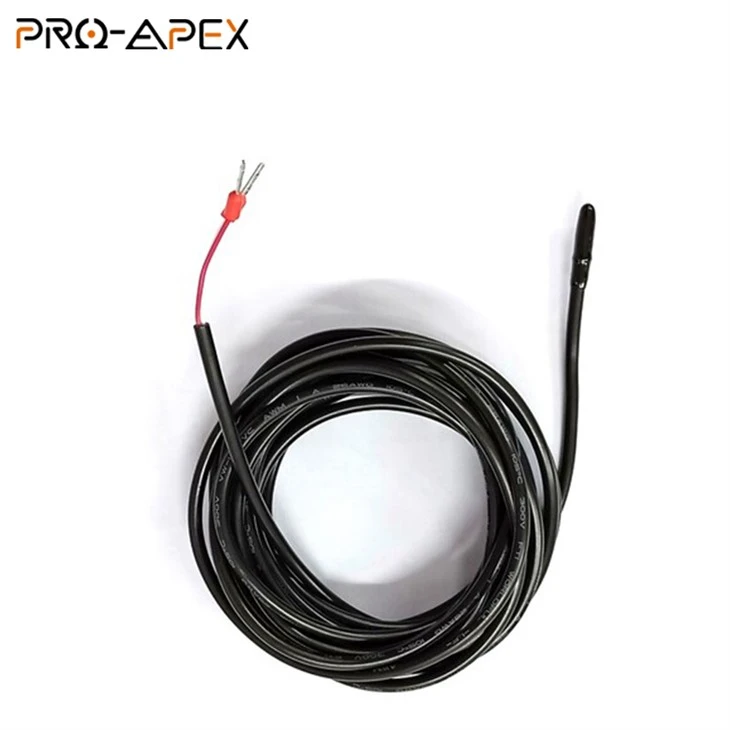
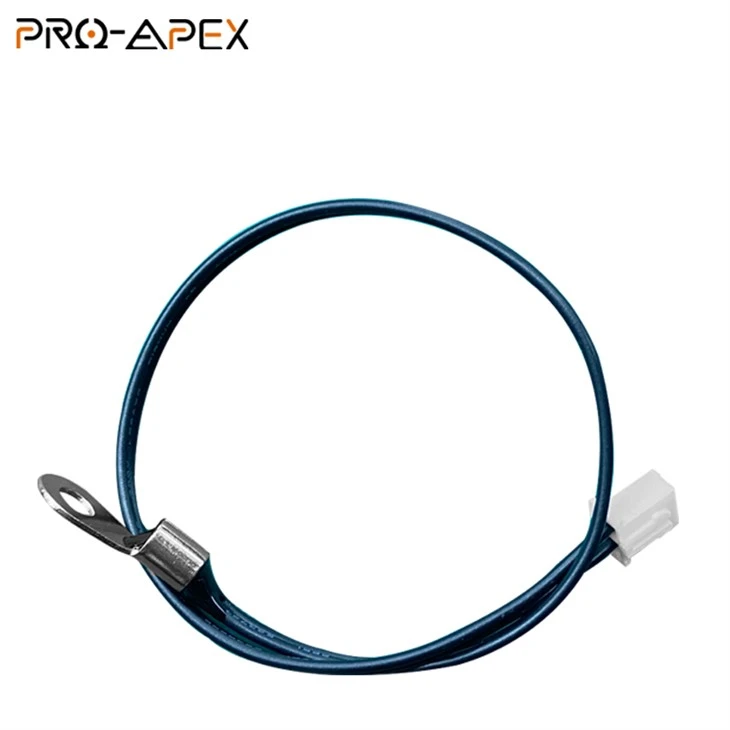
Mosquito Killer Temperature Sensor |
|
Dimension |
3.6mm 9.6mm 29mm Customized(≥50mm) |
|
Product performance |
1.Wire specification:By Customer's Requirements |
|
2.Withstand voltage :AC1000V~AC2000V,3Sec |
|
|
3.Insulation:DC500V Min 100MΩ,3Sec |
|
|
4.Operating temperature range:-30℃~105℃ -30℃~125℃ -30℃~150℃ |
Advantages of Industrial Temperature Sensor
Quality Control
In industries like pharmaceuticals, food and beverage, and electronics, maintaining a specific temperature range is essential for ensuring the quality and safety of products. Temperature sensors provide the necessary monitoring to ensure these standards are consistently met.
01
Process Efficiency
Many industrial processes rely on precise temperature conditions for optimal performance. Temperature sensors help maintain these conditions, leading to efficient use of resources and reduced wastage.
02
Safety
Temperature sensors are vital for safety in industries dealing with hazardous materials or high-heat processes. They help prevent overheating and potential accidents, protecting workers and equipment.
03
Energy Conservation
By optimizing the heating and cooling processes, temperature sensors contribute to energy efficiency. This is not only cost-effective but also environmentally beneficial.
04
Predictive Maintenance
Temperature sensors can detect anomalies in equipment performance, signaling the need for maintenance before a major breakdown occurs. This proactive approach saves time and money and increases the lifespan of the equipment.
05
Applications of Industrial Temperature Sensors
Manufacturing
Ensuring machinery operates within safe temperature limits, thus preventing overheating and maintaining production quality.
Food and Beverage
Monitoring temperatures during processing and storage to ensure food safety and quality.
Pharmaceuticals
Critical in maintaining the integrity of products that are sensitive to temperature changes.
Automotive
Used in engine management systems to monitor and control engine temperatures.
Resistance Temperature Detector (RTD)
Operating Principle:
RTDs measure temperature by correlating changes in the resistance of a metal (usually platinum) with temperature.
Key Features:
High accuracy (±0.1°C to ±0.5°C)
Excellent long-term stability
Linear response
Applications:
Chemical plants
Pharmaceutical manufacturing
Food processing
Thermocouple
Operating Principle:
A thermocouple consists of two dissimilar metals joined at one end. The temperature difference generates a voltage signal, which is converted into a temperature reading.
Key Features:
Wide temperature range (-200°C to +1800°C)
Rugged and economical
Applications:
Metal furnaces
Boilers
Oil and gas pipelines
Thermistor
Operating Principle:
A thermistor is a temperature-sensitive resistor whose resistance changes dramatically with temperature. Key Features:
High sensitivity over a small range
Compact and affordable
Applications:
HVAC systems
Medical equipment
Consumer electronics
Infrared (non-contact) temperature sensor
Operating principle:
Measures infrared radiation emitted by an object without direct contact.
Key Features:
Ideal for moving or inaccessible objects
Non-invasive measurement
Applications:
Rotary kilns
Moving conveyors
Hazardous areas
Digital integrated circuit (IC) sensor
Operating principle:
Semiconductor-based sensor with built-in analog-to-digital converter for direct digital output.
Key Features:
Easy integration with microcontrollers and PLCs
Suitable for low-temperature ranges
Applications:
Electronics cooling
HVAC systems
Smart factory automation
Fiber optic temperature sensor
Operating principle:
Measures temperature using changes in light transmission through an optical fiber.
Key Features:
Immune to electromagnetic interference (EMI)
Well-suited for high-voltage environments
Applications:
Power transformers
Nuclear facilities
MRI-compatible environments
Installation Considerations
Proper installation has a direct impact on measurement accuracy. Temperature sensors must be placed where they can accurately represent the process. In tanks or vessels, avoid mounting near walls or near inflow/outflow points, which could distort readings due to localized temperature variations.
When sensors are exposed to pressurized or aggressive media, they should be installed inside thermowells. Thermowells protect the sensor from corrosion or mechanical damage and allow for replacement without shutting down the process. The choice of material—typically stainless steel, Hastelloy, or PTFE—depends on the application and fluid properties.
Signal wiring must also be treated with care. For analog sensors, shielded cables are recommended to minimize electromagnetic interference, especially when routing wires near motors, inverters, or power lines. Grounding should be consistent to avoid ground loops or false readings.
In clean or sterile environments such as pharmaceuticals or dairy plants, the sensor assembly must also meet hygienic design standards, including smooth surfaces, weld-free joints, and compatibility with CIP/SIP procedures.
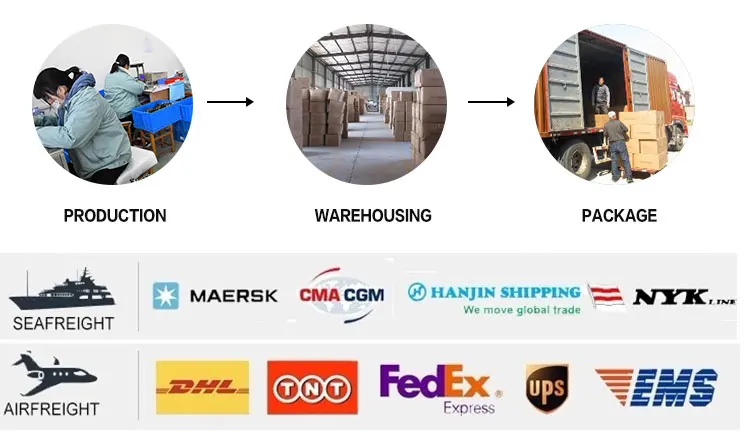
Packaging and Shipping
Company Certificate

We're well-known as one of the leading cwf-industrial manufacturers in China. If you're going to buy bulk high quality cwf-industrial at low price, welcome to get free sample from our factory. Also, customized service is available.
ntc thermistor for electric kettle, low ohm resistor, circuit board resistor