


Your Professional CWF - Automotive Supplier!
Pro-APEX Electronics Co. . Ltd. has been deeply involved in the field of electronic components for 17 years since 2006. We are committed to the independent research and development and production of circuit protection technologies, products and related testing equipment.


Why Choose Us
Our Team
Our R & D team has been engaged in this industry for 30 years, developed numerous product formulations, is China's first batch of electronic components engineers, electronic components for China has made outstanding contributions to the cause.
One-Stop Service
In the fields of motor drive and control, power electronics reliability and power supply design, hardware development technology and components application, electromagnetic compatibility technology application, new energy low-voltage electrical apparatus, etc. , all of them have reasonable supporting schemes and technical support for electronic components.
Our Certifications
We are the first in the world to obtain 130℃certification. In our UL1449 certification, the standard requires that the number of lightning surge 15 times to determine the qualified, and our products after 20 lightning surge impact.
Wide Range Of Product Applications
Pro-APEX's main products include: capacitors, temperature sensors, NTC thermistors, varistors, fuses, Inrush Current PTC. Products are widely used in consumer electronics, power transmission and distribution systems, IT-AV, communications, white goods, new energy and other industries and fields.
Product Specifications
|
Product Name |
Automotive Air Conditioner Temperature Sensor |
|
Dimension |
5mm 8mm Customized(≥50mm) |
|
Product performance |
1.Wire specification:By Customer's Requirements |
|
2.Withstand voltage :AC1000V~AC2000V,3Sec |
|
|
3.Insulation:DC500V Min 100MΩ,3Sec |
|
|
4.Operating temperature range:-30℃~105℃ -30℃~125℃ -30℃~150℃ |
Advantages of Automotive temperature sensor
Engine performance and efficiency: Temperature sensors help the ECU optimize engine performance, fuel injection, and ignition timing based on the engine's operating temperature.
Emissions control: Temperature sensors enable the ECU to monitor and control emissions-related systems, such as the catalytic converter and exhaust gas recirculation (EGR) system.
Safety: Temperature sensors can detect overheating conditions, which can prevent engine damage and reduce the risk of accidents.
Comfort and convenience: Temperature sensors are used in climate control systems to regulate cabin temperature and maintain a comfortable driving environment.
Applications of Temperature Sensor in Automotive Systems
Monitoring Engine Temperature
Makes use of sensors to ensure that engines operate within the safe temperature limit.
Battery Management Systems
The use of sensors to measure battery temperatures is essential in an electric vehicle.
Climate Control Systems
Automotive air conditioning systems use temperature sensors to maintain a comfortable cabin environment. These sensors adjust the cooling and heating cycles based on the internal and external temperatures.
Engine Temperature Sensor: Installed in the coolant circuit, it measures engine temperature, with a range from -40°C to +130°C, informing the engine control module (ECM) for optimal performance.
Air Temperature Sensor: Positioned in the intake manifold, this sensor measures intake air temperature, helping the ECM calculate the intake air mass. Its range is typically from -40°C to +120°C.
Engine Oil Temperature Sensor: This sensor monitors the engine oil temperature, usually ranging from -40°C to +170°C, providing essential data for engine management.
Exhaust Gas Temperature Sensor: Utilizing a platinum measuring resistor, this sensor regulates the exhaust gas recirculation system, with a wide measurement range from -40°C to +1000°C.
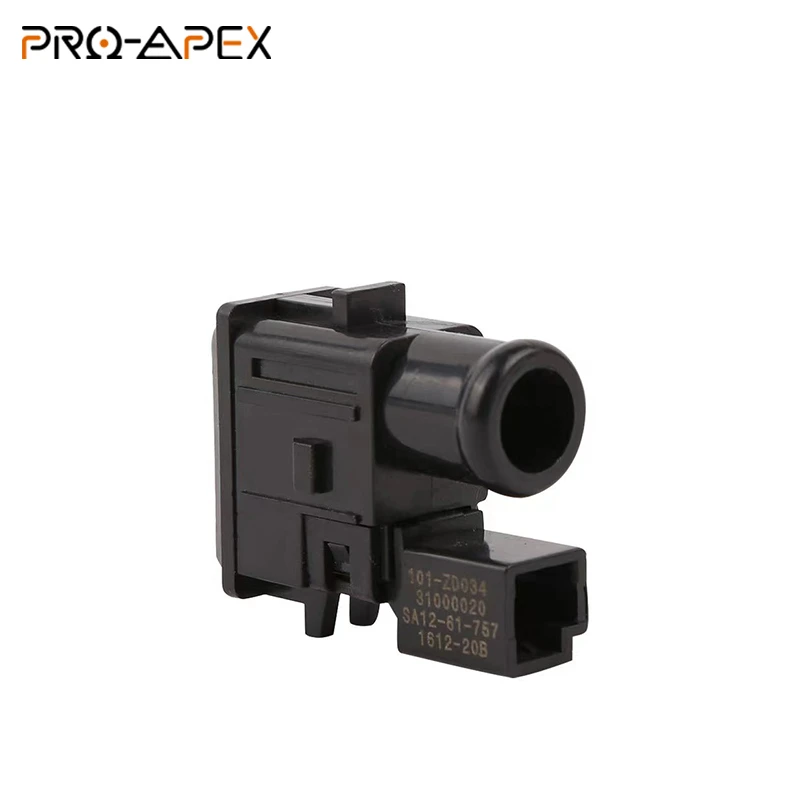

Fuel Temperature Sensor: Located along the fuel delivery system, it measures fuel temperature, which typically ranges from -40°C to +160°C, aiding the powertrain control module (PCM) in fuel system management.
Transmission Fluid Temperature Sensor: Found in automatic transmissions, this sensor tracks the transmission fluid temperature, ranging from -40°C to +210°C, crucial for transmission performance.
Tire and Brake Disc Temperature Sensors: These sensors, often infrared types, monitor the temperature of tires and brake discs without direct contact, ensuring safety and performance under varying conditions.
Auxiliary Heater Temperature Sensor: Used in systems like seat heaters, these sensors provide feedback necessary for controlling comfort settings.
Packaging and Shipping

Company Certificate

We're well-known as one of the leading cwf - automotive manufacturers in China. If you're going to buy bulk high quality cwf - automotive at low price, welcome to get free sample from our factory. Also, customized service is available.
resistor distributor, power thermistor, pull up resistor